Flowers through time
exploring their cultural and historical significance from Antiquity to the presents
DOI:
https://doi.org/10.1590/2447-536X.v32.e323015Keywords:
Floriculture, history, symbolism, societyAbstract
Throughout history, from ancient civilizations to the contemporary world, flowers have always been present, in various contexts, such as cultural, symbolic or even economic. Thus, through the consultation of books, scientific publications and collections of art museums, this text addresses the symbologies of flowers in different civilizations and times, highlighting their social, cultural, religious and artistic importance. In Antiquity, the utilization of flowers was already multifaceted, including the offering to the gods, such as the lotus in Egypt, as evidenced in murals painted by this civilization. The Greeks and Romans used them to crown heroes of the arts and sports, while in Asia, especially for the Chinese and Japanese, species such as the chrysanthemum and the rose became important symbols. Among the Aztecs, unique flower gardens played a central role in religious rituals. During the European Middle Ages, flowers were fundamental in religious and medicinal functions, and in the Renaissance, they became a recurring inspiration for artistic expressions. In the nineteenth century, the Victorian Era highlighted floriography, in which bouquets expressed feelings determined by floral codes. In Brazil, indigenous and African peoples also attributed symbolism to flowers, being linked to nature and spirituality. With the Portuguese colonization, they reinterpreted these meanings and inserted them into the Christian narrative. In the Imperial period, flowers represented social distinction, but it was only from the 1950s, with the influence of Japanese and Dutch immigrants, that Brazilian floriculture began a process of expansion, becoming an important commercial activity. Currently, flowers, although no longer bearing the strong symbolism of previous eras, still express sensitivity and convey affection through their inherent beauty and aesthetic appeal, intertwining tradition and contemporaneity across different cultures.
Downloads
References
AKI, A.; PEROSA, J.M.Y. Aspectos da produção e consumo de flores e plantas ornamentais no Brasil. Ornamental Horticulture, v.8, n.1, 2002. https://doi.org/10.14295/rbho.v8i1.304
ALMEIDA, M.Z. Plantas medicinais: abordagem histórico- contemporânea. Plantas medicinais, v.3, p.34-66, 2011.
ANACLETO, A.; OLIVEIRA AGUIAR, S.; PRAZERES, A.S.G.; MORO, S.C.; ROSÁRIO, C.L. Comércio varejista de flores: uma análise do perfil e comportamento da mulher consumidora de flores com objetivo de presentear. Revista da Micro e Pequena Empresa, v.16, n.1, p.68-81, 2022. http://dx.doi.org/10.48099/1982-2537/2022v16n1p6881
ANACLETO, A.; SCHEUER, L. Between flowers and loves: the profile and behavior of the consumer with the purpose of seduction. Ornamental Horticulture, v.29, n.4, p.480-488, 2023. https://doi.org/10.1590/2447-536X.v29i4.2634
ART RENEWAL CENTER. Mameluca Woman. Available at: <https://www.artrenewal.org/artworks/mameluca-woman/albert-eckhout/102076>. Accessed on: 10 July 2025.
BEDIAGA, B.; LIMA, H.C.; MORIM, M.P.; BARROS, C. Da aclimatação à conservação: as atividades científicas durante dois séculos. In: Jardim Botânico do Rio de Janeiro: 1808-2008. Instituto de Pesquisas Jardim Botânico do Rio de Janeiro, Rio de Janeiro, 2008. 250p.
BERRENS, D. The meaning of flora. Humanistica Lovaniensia, v.68, n.1, p.237-249, 2019. https://doi.org/10.30986/2019.237
CAMARGO, M.T.L.A. Os poderes das plantas sagradas numa abordagem etnofarmacobotânica. Revista do Museu de Arqueologia e Etnologia, n.15-16, p.395-410, 2006. https://doi.org/10.11606/issn.2448-1750.revmae.2006.89745
CASTRO, C.E.F. História da floricultura brasileira: organização e evolução. Magistra, v.21, n.4, p.233-252, 2010.
CASTRO, C.E.F.; GONÇALVES, C.; TUCCI, M.L.S. History and development of Brazilian floriculture. Acta Horticulturae, v.1060, p.17-21, 2015. https://doi.org/10.17660/ActaHortic.2015.1060.1
CONNOR, M. Sir Joseph Banks: eco hero or eco zero. In: Using the Visual and Performing Arts to Encourage Pro-Environmental Behaviour, p.445, 2020.
DOMINGUES, H.M.B. O Jardim Botânico do Rio de Janeiro. In: Espaços da ciência no Brasil: 1800-1930. Rio de Janeiro: Editora Fiocruz, p.27-56, 2001.
DRÖSCHER, A. The sweeping power of horticulture. In: Plants and Politics in Padua during the age of Revolution, 1820–1848. Palgrave Studies in the History of Science and Technology. Palgrave Macmillan, Cham. Springer International Publishing, p.201-215, 2021. https://doi.org/10.1007/978-3-030-85343-3_8
DUBOIS, J. Carnaval: fête, révolte, spectacle. Etudes Françaises Montréal, v.15, n.1-2, p.15-34, 1979. https://doi.org/10.7202/036678ar
DUDKIEWICZ, M.; POGROSZEWSKA, E. Flower Corso (“Flower Parade”) in the Circle of Culture. Architektura Krajobrazu, v.4, p.52-61, 2014.
EL FAR, A. A linguagem sentimental das flores: e o namoro às escondidas no Rio de Janeiro do século XIX. Editora UNESP, 2022.
ESTRADA, D.L.; CHANG, W.; HEINRICH, M. From “traditional” to modern medicine: A medical and historical analysis of Tagetes erecta L. (Cempasúchil). Journal of Traditional and Complementary Medicine, v.15, n.1, p.6-14, 2025. https://doi.org/10.1016/j.jtcme.2024.08.001
FERGUSON, A.R. The 2008 Banks Memorial Lecture: Sir Joseph Banks and the transfer of crop plants. New Zealand Garden Journal, v.11, n.2, p.9-15, 2008.
FOGDEN, M.; FOGDEN, P. The natural history of flowers. Texas A&M University Press, p.1-8, 2018. https://muse.jhu.edu/book/60702
FREVERT, U.; HILLARD, D.; LEMPA, H.; SPINNEY, R.A. The emotional language of flowers. Feelings Materialized: Emotions, Bodies, and Things in Germany, 1500–1950, v.21, p.202, 2020.
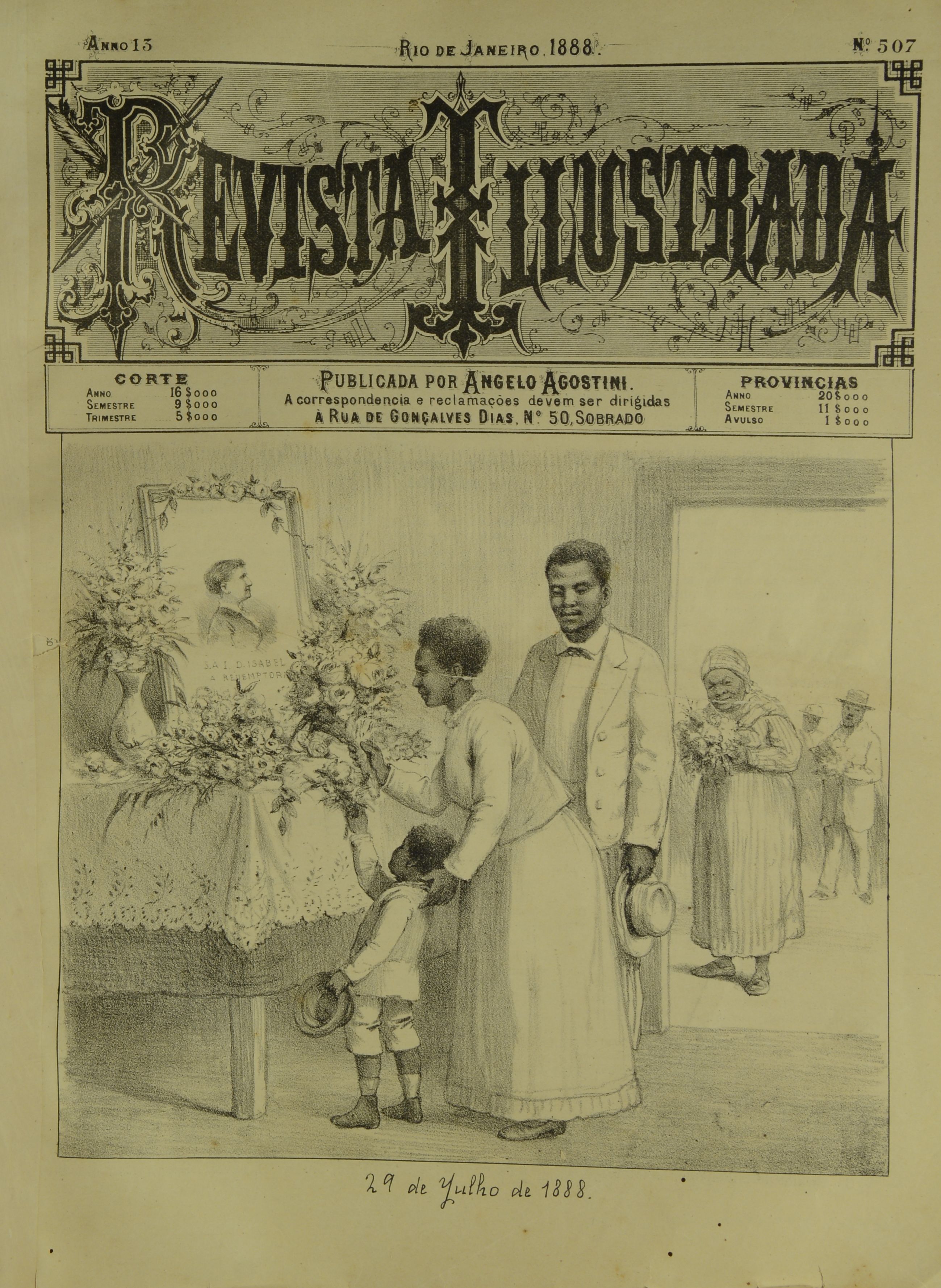
FUNDAÇÃO CASA DE RUI BARBOSA. Revista Illustrada, ano/livro n.78, página 507 [imagem]. Available at: <http://www.memoriaescravidao.rb.gov.br/estante_digital/revista_ilustrada/revil78_507.JPG>. Accessed on: July 10th, 2025.
GALLERIA DEGLI UFFIZI. Annunciation. Available at: <https://www.uffizi.it/en/artworks/annunciation>. Access on: July 10th, 2025.
GAUDÊNCIO, J.S.; RODRIGUES, S.P.J.; MARTINS, D.R. Indígenas brasileiros e o uso das plantas: saber tradicional, cultura e etnociência. Khronos, n.9, p.163-182, 2020. https://doi.org/10.11606/khronos.v0i9.171134
GÉCZI, J. The Roman rose. An anthropological approach. Iskolakutúra Online, v.2, p.1-66, 2008.
GOMEZ, B.; DAVIERO GOMEZ, V.; COIFFARD, C.; BARRAL, A.; MARTÍN CLOSAS, C.; DILCHER, D.L. Montsechia vidalii from the Barremian of Spain, the earliest known submerged aquatic angiosperm, and its systematic relationship to Ceratophyllum. Taxon, v.69, n.6, p.1273-1292, 2020. https://doi.org/10.1002/tax.12409
GOMEZ, B.; DAVIERO-GOMEZ, V.; COIFFARD, C.; MARTÍN-CLOSAS, C.; DILCHER, D.L. Montsechia, an ancient aquatic angiosperm. Proceedings of the National Academy of Sciences, v.112, n.35, p.10985-10988, 2015. https://doi.org/10.1073/pnas.1509241112
GUERRA, M.F. Goldworking in Mycenaean Thessaly: Technological study of the gold objects from the four tholos tombs in the Bay of Volos. Journal of Archaeological Science: Reports, v.64, 105129, 2025. https://doi.org/10.1016/j.jasrep.2025.105129
GUZMÁN, O.A. Xochimilco: Aspectos histórico-culturales. Decires, v.7, n.7, p.119-139, 2005.
HETZEL, B.; NEGREIROS, S. Glaziou e as raízes do paisagismo no Brasil. Rio de Janeiro: Manati, 2011.
HUNTER, N.T. The art of floral design. Albany: Delmar Publishers Inc., 1994. 566p.
HUSTI, A.; CANTOR, M. Sacred connection of ornamental flowers with religious symbols. ProEnvironment Promediu, v.8, n.21, 2015. http://journals.usamvcluj.ro/index.php/promediu
JASPRICA, N.; LUPIS, V.B.; DOLINA, K. Botanical analysis of the Baroque Art on the Eastern Adriatic Coast, South Croatia. Plants, v.12, n.2080, 2023. https://doi.org/10.3390/plants12112080
JUNQUEIRA, A.H.; PEETZ, M. Brazilian consumption of flowers and ornamental plants: habits, practices and trends. Ornamental Horticulture, v.23, n.2, p.178-184, 2017. https://doi.org/10.14295/oh.v23i2.1070
KHIN, H.M. A study of Hindu concepts about gods and goddess. Dagon University Research Journal, v.11, p.58-64, 2020.
KNIPPEL, P.; GIBALDI, D.; SÁ, M.R.; COSTA, J. A primeira obra de história natural do Brasil (1648): Uma análise histórica e de preservação. Museologia e Patrimônio, v.18, n.1, 2025. https://doi.org/10.52192/1984-3917.2025v18n1p13-42
KOPYTIN, A.; ZHOU, T.Y. From ikebana to botanical arranging: Artistic, therapeutic, and spiritual alignment with nature. Ecopoiesis: eco-human theory and practice, v.2, n.1, p.33-40, 2021. https://doi.org/10.24412/2713-184X-2021-1-33-40
LIMA, F.M.S. A Imperial Ordem da Rosa entre as Ordens Honoríficas do Brasil Imperial (1822-1889). Pesquisa & Educação a Distância, n.7, 2020.
LIMA, L.F.S.; SILVA, B.C.P. A presença do Novo Mundo na iconografia da morte e dos sonhos de São Francisco Xavier: a missão jesuítica e as partes e gentes do Império Português. Varia História, v.30, p.407-441, 2014. https://doi.org/10.1590/S0104-87752014000200005
LOY, S. Spread of flower symbolism: From the Victorian language of flowers to modern flower emoji. In: Handbook of the changing world language map. Cham: Springer, 2019. p.1-24.
MACHADO, J.A.G. Inácio de Loyola - Construção de uma Iconografia. In: “Ver novas todas as coisas” - Da Conversão à Canonização de Inácio de Loyola. Museu de São Roque, Lisboa, 2022. https://doi.org/10.1007/978-3-030-02438-3_59
MAREE, J.; VAN WYK, B. Cut flowers of the world. Portland: Timber Press, 2010.
MARGARIS, N.S. Flowers in Greek mythology. Acta Horticulturae, v.541, p.23-29, 1999. https://doi.org/10.17660/ActaHortic.2000.541.1
MUSEO ARCHEOLOGICO NAZIONALE DI NAPOLI. Affreschi. Available at: <https://museoarcheologiconapoli.it/affreschi/#gallery-4>. Access on: July 10th, 2025.
NAVINER, B. Indigene ou exotique? Les contradictions des jardins sauvage ou l’oubli du premiers voyage. In: Plantes et animaux voyageurs. Actes des Congrés Nationaux des Societés Historiques et Scientifiques. La Rochelle, Paris, 2005, p.130-11. Paris: Editions du CTHS, 2010, p.112-123.
NELSON, E.C. Victorian royal wedding flowers: Orange, myrtle, and the apotheosis of white heather. Garden History, v.37, n.2, p.231-236, 2009. https://www.jstor.org/stable/27821599
NEVES, M.F.; PINTO, M.J.A. Mapeamento e quantificação da cadeia de flores e plantas ornamentais no Brasil. São Paulo: OCESP, 2015.
OLIVEIRA, A.A.P.; BRAINER, M.S.C.P. Floricultura: caracterização e mercado. Banco do Nordeste do Brasil, 2007.
PAIVA, P.D.O. Paisagismo: Conceitos e Aplicações. Lavras: Editora UFLA, 2008. 603p.
PAIVA, P.D.O.; CASTRO, A.C.R.; GEEST, A.P.S.L.V.D.; VIEIRA, G.F.R.; HUMMEL, M.; LOPES, H.D.S.; COSTA, J.L.D.S. Diagnosis of the production chain of flowers, turfgrass, and ornamental plants: proposal for an innovation agenda. Ornamental Horticulture, v.30, p.e242792, 2024. https://doi.org/10.1590/2447-536X.v30.e242792
PAIVA, P.D.O.; REIS, M.V.D.; SANT’ANA, G.S.; BONIFÁCIO, F.D.L.; GUIMARÃES, P.H.S. Flower and ornamental plant consumers profile and behavior. Ornamental Horticulture, v.26, n.3, p.333-345, 2020a. https://doi.org/10.1590/2447-536X.v26i3.2158
PAIVA, P.D.O.; SOUSA, R.D.B.; CARCAUD, N. Flowers and gardens on the context and tourism potential. Ornamental Horticulture, v.26, p.121-133, 2020b. https://doi.org/10.1590/2447-536X.v26i1.2144
PETRY, C. Plantas ornamentais: Aspectos para a produção. Passo Fundo: Editora Universitária, 2000. 155p.
PICKLES, S. A linguagem das flores - Penhalignon’s tesouro perfumado em prosa e verso. São Paulo: Melhoramentos, 1992. 111p.
PIMENTA, T.S. Curas, rituais e amansamentos com plantas entre escravizados e libertos no Rio de Janeiro, entre as décadas de 1810 a 1850. Boletim do Museu Paraense Emílio Goeldi. Ciências Humanas, v.17, n.1, p.e20210076, 2022. https://doi.org/10.1590/2178-2547-BGOELDI-2021-0076
The Royal bridal bouquet: From wedding accessory to royal remembrance. The Court Historian, v.27, n.2, p.162-181, 2022. https://doi.org/10.1080/14629712.2022.2093482
SALAZAR, G.M. The cherry blossom and its influence on Japanese culture. Japanese Society and Culture, v.4, n.1, p.12, 2022. Available at: https://gensoken.toyo.ac.jp/japanese-society-and-culture/vol4/iss1/12
SANTANA, L.W.A.; SENKO, E.C. Perspectivas da Era Vitoriana: sociedade, vestuário, literatura e arte entre os séculos XIX e XX. Revista Diálogos Mediterrânicos, n.10, p.189-215, 2016. https://doi.org/10.24858/209
SCHARF, C.P. Ilustração científica no Brasil Holandês: a natureza retratada nos desenhos, pinturas e gravuras dos viajantes no séc. 17. Colóquio do Comitê Brasileiro de História da Arte, v.37, p.428-442, 2017. https://doi.org/10.24978/mod.v4i2.4554
SILVA, E. As camélias do Leblon e a abolição da escravatura. Fundação Casa Rui Barbosa. 2003.
SILVA, L.V.M.; ATHIAS, R.M.; ALVES, J.A. Nossos Saberes: arte, cultura e histórias indígenas no alto Rio Negro. Manaus: Reggo Edições, 2014. 104p.
SOARES, C.B.L.V. O livro de ouro das flores - as cem variedades mais belas, suas características e histórias. Rio de Janeiro: Ediouro, 2002. 271p.
STUMPF, E.; BARBIERI, R. Origem, evolução e história das rosas cultivadas. Current Agricultural Science and Technology, v.11, n.3, 2005.
TANSUĞ, S.; JIROUSEK, C.A.; DENEL, S. The Turkish culture of flowers. The Fabric of Life: Cultural Transformations in Turkish Society, p.249, 2005.
TEIXEIRA, C. La flore fossile des calcaires lithographiques de Santa María de Meyá (Lérida, Espagne). Boletim da Sociedade Geológica de Portugal, v.11, p.139-152, 1954.
THADANITI, S. Learning the greatness of mother nature festival tourism: A case of Loy Krathong water festival in Thailand. In: SHS Web of Conferences. EDP Sciences, p.01050, 2014. https://doi.org/10.1051/shsconf/20141201050
TSUBOI, N.; TSURUSHIMA, H. Introdução à história da indústria de flores e plantas ornamentais no Brasil. São Paulo: Lip Gráfica, 2009. 276 p.
VALLADOME, A. Iemanjá: mãe dos peixes, dos deuses, dos seres humanos. Rio de Janeiro: Pallas Editora, 2020.
VAN TUYL, J.M.; ARENS, P.; MILLER, W.B.; ANDERSON, N.O. The role of ornamentals in human life. Horticulture: Plants for People and Places, Volume 1: Production Horticulture, p.407-433, 2014. https://doi.org/10.1007/978-94-017-8578-5_11
VELOSO, W.P. Entranhas do direito e da arte. Associação de Letras Jurídicas de Montes Claros, v.6, n.1, p.220, 2025.
VLADIMIROVNA, S.O. Still-Lifes of “The Lesser Dutches” as Primary Sources “The German Flowers” Motifs in Porcelain Ware of European Countries. Journal of Danubian Studies and Research, v.9, n.1, 2019.
VON BAEYER, E. The development and history of horticulture. Oxford, United Kingdom: Eolss Publishers, 2010.
WADOOD, A.M.; PANAYOTIDI, M. The Floral and Geometrical Elements on the Ottoman Architecture in Rhodes Island. Egyptian Journal of Archaeological & Restoration Studies, v.4, n.2, 2014.
WORTHEN, T. Poussin’s paintings of Flora. The Art Bulletin, v.61, n.4, p.575-588, 1979. https://doi.org/10.1080/00043079.1979.10787705
ZEILLER, R. Sur quelques empéntes végétales du Kimméridgien de Santa Maria de Meya, province de Lérida en Catalogne (Espagne). Memorias de la Real Academia de Ciencias y Artes de Barcelona, v.2, p.1-27, 1902.

Downloads
Published
How to Cite
Issue
Section
License
Copyright (c) 1969 Hemelyn Soares Magalhães, Patrícia Duarte de Oliveira Paiva

This work is licensed under a Creative Commons Attribution 4.0 International License.